Make sure to do a thorough interior and exterior evaluation of your home to help you determine the severity of your damage. If there is something you do not understand call an expert who does. This will help expedite the claims process so you can return your home or place of business to pre-storm condition as quickly as possible! If there are other more important life and family issues you need to take care of or if you are feeling uneasy about handling the claim properly, the services of a public insurance claims adjuster may be worth it.
Mike’s knowledge, experience and perseverance made all the difference in the process and the outcome of my claim. Prior to this, I had never heard of public adjusters …. and now I am very grateful to have hired Mike.
– Homeowner
Understanding Tornado Damage Claims
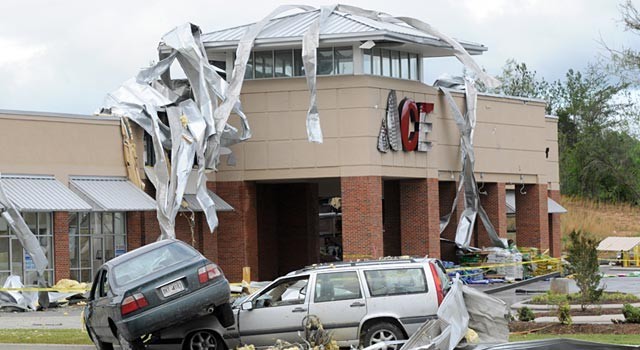
As most homeowners can attest to, the family home is the single most valuable possession and typically the largest investment. When that home is damage by a tornado and resulting hail damage recovering the maximum amount of money needed to repair or replace the damaged property or business will certainly be the biggest challenge one could ever undertake. Understanding the insurance claim process or working with someone who does can make the difference of recovering what you should under your policy.
Tutwiler and Associates staff of professional tornado insurance claims adjusters can help alleviate the arduous insurance claim process and will see to it that you restore your home or business back to its proper condition. Because we understand how insurance companies evaluate claims, we will make sure your claim estimates are backed by fact, you recover what is rightfully due under your policy, and minimize the haggling and stress your insurance company can impose on you when filing a tornado damage insurance claim.
Here are a few key tips to make sure your tornado damage does not turn into an insurance claim nightmare.
- Make sure your insurance company pays you first, not a roofing company or contractor. Never sign over your insurance payment to a 3rd party contractor.
- Ask for an “advance payment” from the insurance company so you can at least start to make temporary repairs.
- Understand the “damage repair estimate” that the insurance company adjuster provides you. If they have not provided one, ask for it right away!
- When reviewing the repair estimate, look for the “10 & 10” on the totals page of the estimate. This refers to the standard 10% extra for overhead and 10% extra for contractor’s profit that is written into many policies and sometimes paid as part of the claim. This is a hotly debated issue in the claims community. If a roof claim is the only damage incurred, then an insurer may take the position you are not going to use a general contractor. Thus they will not pay the 10 and 10 profit and overhead. However, some companies will pay you the 10% overhead if you are supervising the roofer, under the theory that you will have cost and time in this project. Their position on the 10% profit is that you should not profit from your loss. The entire 10 and 10 is generally considered to be a carryover issue from past years, as most honest contractors we know tell us they cannot stay in business under these terms. Their real profit is built in the line-by-line estimates that carry a higher profit margin. Try to work this out with the adjuster if this comes up or call us. These issues may well be covered in court cases, which need to be taken into consideration given how the courts have look at the policy and terms in past years.
- Understand their depreciation calculations. Most insurance companies pay on an “Actual Cash Value” basis (Replacement cost minus depreciation) and will depreciate buildings 50%-70%, drastically reducing the final payment. This is open to negotiation and newer buildings should not be depreciated that much.
- In disaster situations, the demand for building/roofing materials naturally increases. The estimated cost of repairs accounted for in the insurance companies “estimate” will most likely be lower as the demand/price of building materials increases. Make sure you are paid the full amount on the front end so you do not have to go back to ask the adjuster for more. The estimated wait time to have an adjuster re-inspect your home/business is over 2-3 weeks and you may not have the same adjuster as he/she will most likely go back home to the respective state they flew in from.
Contact Tutwiler and Associates today to start the process of a proper and equitable recovery to your tornado damage claim.
As most homeowners can attest to, the family home is the single most valuable possession and typically the largest investment. When that home is damage by a tornado and resulting hail damage recovering the maximum amount of money needed to repair or replace the damaged property or business will certainly be the biggest challenge one could ever undertake. Understanding the insurance claim process or working with someone who does can make the difference of recovering what you should under your policy.
Tutwiler and Associates staff of professional tornado insurance claims adjusters can help alleviate the arduous insurance claim process and will see to it that you restore your home or business back to its proper condition. Because we understand how insurance companies evaluate claims, we will make sure your claim estimates are backed by fact, you recover what is rightfully due under your policy, and minimize the haggling and stress your insurance company can impose on you when filing a tornado damage insurance claim.
Here are a few key tips to make sure your tornado damage does not turn into an insurance claim nightmare.
- Make sure your insurance company pays you first, not a roofing company or contractor. Never sign over your insurance payment to a 3rd party contractor.
- Ask for an “advance payment” from the insurance company so you can at least start to make temporary repairs.
- Understand the “damage repair estimate” that the insurance company adjuster provides you. If they have not provided one, ask for it right away!
- When reviewing the repair estimate, look for the “10 & 10” on the totals page of the estimate. This refers to the standard 10% extra for overhead and 10% extra for contractor’s profit that is written into many policies and sometimes paid as part of the claim. This is a hotly debated issue in the claims community. If a roof claim is the only damage incurred, then an insurer may take the position you are not going to use a general contractor. Thus they will not pay the 10 and 10 profit and overhead. However, some companies will pay you the 10% overhead if you are supervising the roofer, under the theory that you will have cost and time in this project. Their position on the 10% profit is that you should not profit from your loss. The entire 10 and 10 is generally considered to be a carryover issue from past years, as most honest contractors we know tell us they cannot stay in business under these terms. Their real profit is built in the line-by-line estimates that carry a higher profit margin. Try to work this out with the adjuster if this comes up or call us. These issues may well be covered in court cases, which need to be taken into consideration given how the courts have look at the policy and terms in past years.
- Understand their depreciation calculations. Most insurance companies pay on an “Actual Cash Value” basis (Replacement cost minus depreciation) and will depreciate buildings 50%-70%, drastically reducing the final payment. This is open to negotiation and newer buildings should not be depreciated that much.
- In disaster situations, the demand for building/roofing materials naturally increases. The estimated cost of repairs accounted for in the insurance companies “estimate” will most likely be lower as the demand/price of building materials increases. Make sure you are paid the full amount on the front end so you do not have to go back to ask the adjuster for more. The estimated wait time to have an adjuster re-inspect your home/business is over 2-3 weeks and you may not have the same adjuster as he/she will most likely go back home to the respective state they flew in from.
If you would like help with your tornado insurance claim and understand your options, give us a call at 813-412-8357 or contact us.
Free Claim ReviewSuccess Stories
FAQs About Tornado Damage
If you are not happy with the amount of your settlement, or you feel that damage was overlooked, a licensed public adjuster can help you properly document the additional damages so your insurance company pays what is really due under your policy.
To avoid having to go back for more money, make sure the insurance company’s adjuster explains his estimate to you in detail on the front-end so you understand what the insurance company is paying you for. If you don’t feel like it is enough to cover for the repair costs, you have the right to ask for a reinspection to go over the outstanding issues. If the issues still do not get resolved consider contacting a public adjuster.
In disaster situations many out of state companies set up shop and solicit business in the damaged areas. Check to see if they are licensed, bonded, and insured. This holds true for those claiming to be claims adjusters also. Make sure not to sign your insurance settlement proceeds over to them. Collect your settlement money first and then get bids and estimates from the contractors. This puts you in the driver seat so you are the one controlling your money, not someone else. Don’t sign your insurance claim over to anyone or let a contractor tell you they will work things out with the insurance company. More often than not they may be pocketing money meant to fix your property.
Take notes and pictures of everything that was damaged. When the adjuster arrives go through the list and make sure the adjuster acknowledges the damages and agrees to pay for each item. Then get it in writing.
Typically a public insurance adjuster is paid on a contingency fee basis meaning they take a small percentage of the insurance claim settlement that they are able to collect for you. Studies have shown that policyholders with public adjuster representation tend to collect more than those who do not have a public adjuster representing their best interest. Most insurance company adjusters with tell you they like working with public adjusters as they understand the claims process, which in turn will expedite the settlement.
Check your policy to see if you have law and ordinance coverage.
Pre-existing damage is the term often used by insurance company adjusters when there is questionable damage that may not be related to a covered cause of loss. The burden of proving otherwise falls on the policyholder. Other disputes such as wear and tear often create issues and is a situation that comes up quite often. Using the expertise of a public adjuster to help you prove that your claim damage is tornado related may impact the success of your claim.
- Ask them their thoughts about your loss and get them to explain their opinion of how to repair the damage aka “method of repair”
- Ask how values and prices are determined. Many use estimating software that has predetermined pricing, which may not be enough if the cost of materials increases due to increased demand for building materials in your area.
- Ask when you get paid and don’t be afraid to ask for an advanced payment.
- Ask them to come back to explain their estimate to you.
- Ask for their E-mail or address so you can keep up with written communication. Many times adjusters are flown in from out of state. They write up estimates, submit them to the main claims office and they are gone.
Always examine the settlement check for language that might say something like: “Cashing this check constitutes full payment of your insurance claim.” If you are required to sign a release or this language is on your check, you should consult with an attorney to determine what rights you may be giving up by cashing the check or signing the release.
During catastrophic events like tornadoes, the damage is so extensive that many times insurance company adjusters are flown in from out of state. They are tasked with doing as many inspections as possible in a day and many times do not spend adequate time investigating the insurance loss, preventing the policyholder from collecting what they should. Additional damages always arise during the course of a claim investigation. The more time that is spent investigating and estimating the loss, the better. Multiple inspections of the damage is a key to ensure a thorough investigation is completed so you are paid the full amount of the loss. We believe this is one of the advantages of hiring a public adjuster is that we offer a more thorough investigation.
Take as many photographs of personal property/business inventory as possible! This evidence will help your claim to ensure you are paid for those items. On more expensive items such as electronics, write down model and serial numbers.